
Character Background Story Generator: How to Build Deeper Characters Faster
Every compelling story lives or dies on its characters. Readers don't fall in love with plot points — they fall in love with people. And behind every memorable character is a backstory that explains why they do what they do.
That's where a character background story generator comes in. It's a tool — often AI-powered — that helps writers develop rich character histories, personality traits, motivations, and formative experiences. Fast.
But there's a right way and a wrong way to use one. This guide walks you through both.
What Is a Character Background Story Generator?
At its core, a character background story generator is a writing aid that produces backstory content based on your inputs. You might feed it a name, a genre, a personality type, or a key life event. The tool then builds a narrative history around those seeds.
Good generators go beyond surface details. They explore childhood trauma, formative relationships, career arcs, belief systems, and turning points. The output gives writers raw material — not finished prose, but a foundation to build from.
Think of it as a co-writer who never runs out of ideas.
Why Character Backstory Matters More Than Most Writers Realize
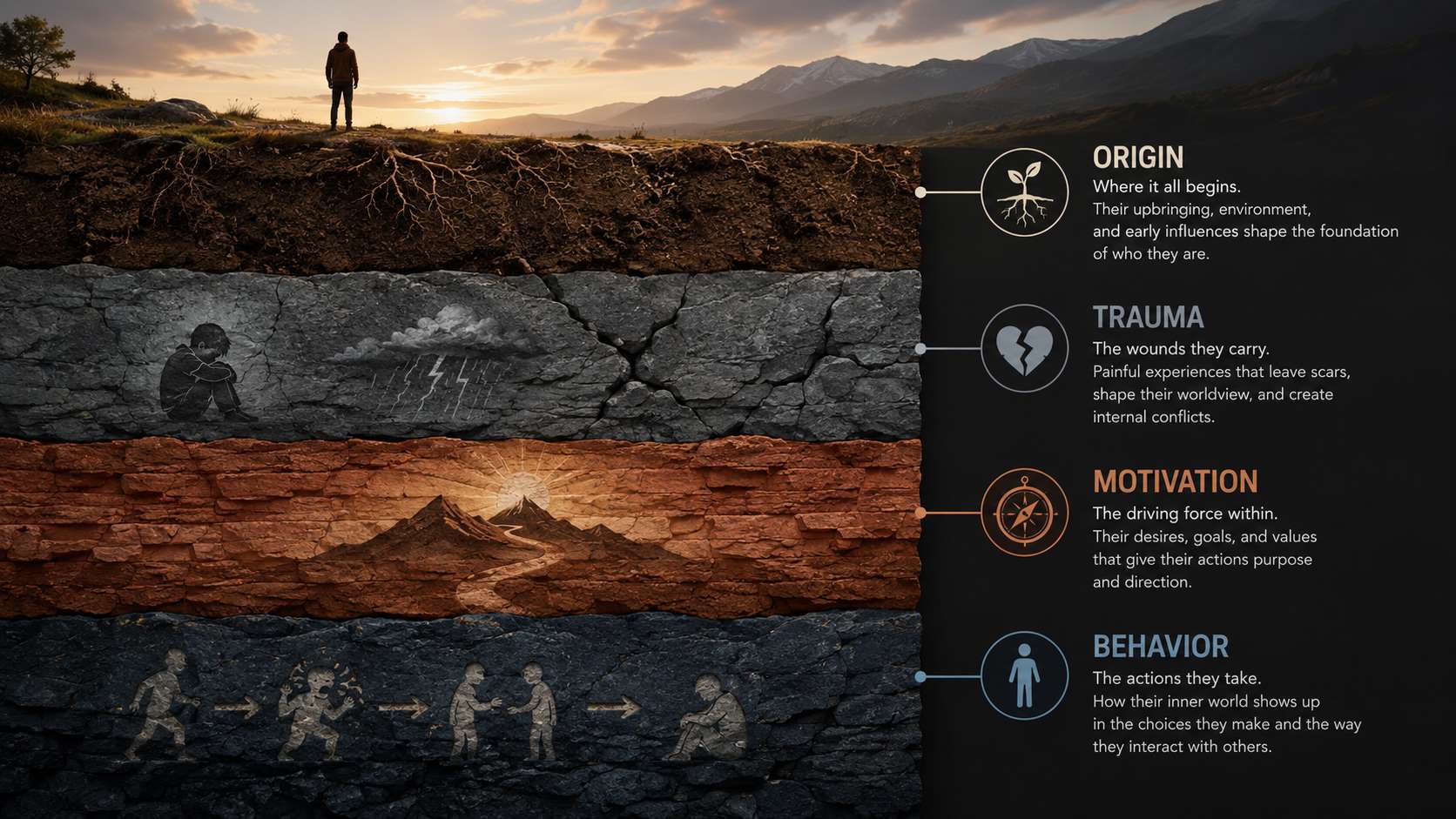
A character's past shapes their present behavior. If your protagonist flinches every time someone raises their voice, there's a reason. If your villain is generous to strangers but cruel to those they love, that contradiction has roots somewhere.
Readers may never see the full backstory on the page — but they feel it. It creates behavioral consistency that makes characters believable.
According to a study published in Psychology of Aesthetics, Creativity, and the Arts, readers rate characters as significantly more likeable and memorable when their motivations are clearly grounded in personal history. Backstory isn't decoration. It's architecture.
Industry estimates also suggest that character development is among the top three reasons readers abandon a book early — right alongside pacing and predictable plots. Getting characters right matters at every level of craft.
What Makes a Good Character Background?
Before you reach for any character backstory tool, know what you're actually building toward. A strong character background typically includes:
- Origin: Where did they grow up? What was the social, cultural, or economic environment?
- Defining experiences: What happened to them that they couldn't unhappen? What shaped their worldview?
- Relationships: Who did they love, lose, or learn from?
- Wounds and fears: What are they still carrying? What do they avoid?
- Goals and contradictions: What do they want versus what do they actually need?
The best character histories feel messy and human — not clean hero-origin stories. Real people are contradictions. Your characters should be too.
How to Use a Character Background Story Generator Effectively
1. Start with one strong anchor detail
Don't dump everything you know into the generator at once. Start with one specific, vivid detail. "A woman who grew up in a lighthouse" is more generative than "a mysterious woman with a troubled past."
The more specific your input, the more specific — and usable — your output will be.
2. Use the output as a prompt, not a script
A generated background gives you raw clay. Your job is to sculpt it. Take what resonates, discard what doesn't, and push the ideas further with your own imagination.
Don't copy-paste a generated backstory wholesale into your manuscript. Instead, extract the emotional truth from it — then write that truth in your own voice.
3. Stress-test the backstory against your plot
Once you have a background, ask: does this history make my character's choices in the story inevitable? Not predictable — inevitable in retrospect. The backstory should make readers think "of course they did that" once they know the full picture.
If the history doesn't connect to the plot, revise until it does.
4. Generate multiple versions and compare
One of the underused advantages of a character background story generator is speed. Generate three or four different backgrounds for the same character. Compare them. Often, the best version is a hybrid — taking the family history from one, the formative wound from another.
Common Mistakes Writers Make with Background Generators
Relying on backstory as a substitute for character voice
Backstory explains behavior. Voice is behavior. Don't let a detailed history become an excuse for a flat, passive character on the page. The background should fuel how they speak, react, and make decisions — not replace it.
Making backstory too tragic
There's a temptation — especially when generating automatically — to pile on the darkness. Dead parents, abuse, war, betrayal. But relentless trauma without nuance creates characters who feel like victims of plot, not agents of story.
Mix in warmth, humor, and small ordinary joys. Even broken people had good days.
Ignoring how backstory evolves through the story
A character's relationship with their own history changes as the story progresses. The backstory you build at the start is a starting point — not a fixed document. Let it shift as your character grows.
Choosing the Right Tool for the Job
Not all character backstory generators are built the same. Some offer only surface-level prompts. Others integrate backstory into a larger storytelling workflow — which is where they become genuinely useful for writers who want more than a one-off exercise.
Freequill approaches this differently. Rather than treating character generation as an isolated feature, it weaves backstory into the full narrative process. Writers can set their genre and tone upfront, then let the AI generate story content that reflects the character's history in motion — not just on a profile sheet. The Continue Story feature means you can take a generated character background and immediately extend it into full scenes, letting the history breathe within actual narrative. And the Plot Twist Engine can surface unexpected turns that emerge from character history, not despite it.
For writers who want to experiment across genres — say, taking the same character from a noir thriller into a fantasy setting — the narrative style selector makes that tonal shift manageable without starting from scratch.
A Quick Example: From Blank Page to Backstory
Imagine a hobbyist writer who generates short fiction daily just for the joy of it. She inputs a single anchor detail into a character background story generator: "a retired forger who now teaches calligraphy to children." Within seconds, she has a layered history — a childhood spent watching her father counterfeit documents to survive, a decision in her 30s to go straight, and a quiet guilt she's never spoken aloud. None of that was in her original idea. But all of it makes the character feel lived-in.
That's the real value here. Not automation for its own sake, but creative acceleration — getting to the interesting questions faster.
Frequently Asked Questions
Can a character background story generator work for non-fiction or memoir?
Technically yes — but with care. For memoir, you already know the real history. A generator can help you structure or reframe that history for narrative impact. Just make sure any generated content stays clearly separate from what's actually true.
Do I need to have a story idea before using one?
No. Many writers use character generators as a starting point — letting an interesting background suggest a story, rather than the other way around. Characters can drive plot discovery.
How much of the generated backstory should I actually use?
Whatever serves the story. There's no rule. Some writers use 10% and find that 10% invaluable. Others build extensively on the output. Treat it like a brainstorm session — everything is on the table, nothing is mandatory.
Is a character background generator useful for side characters too?
Absolutely. Even minor characters benefit from a line or two of hidden history. It changes how you write them — and readers sense the depth even when the details never appear on the page.
What genres work best with this kind of tool?
Any genre that relies on character motivation — which is most of them. Fantasy, literary fiction, thriller, romance, and science fiction all depend on characters with believable histories. Genre doesn't limit the value; it shapes how the backstory gets expressed.
Build Characters That Feel Real
A character background story generator won't write your book for you. But it will help you stop staring at a blank page, wondering who your characters actually are.
Freequill gives writers an uncensored, genre-flexible environment to generate and develop those characters without creative guardrails getting in the way. You set the tone, the genre, the direction — the AI meets you there. Whether you're writing daily for fun or building something longer and more ambitious, the tools exist to move faster and go deeper at the same time.
If you've been circling a character idea without knowing how to crack it open, now's the time to try. Start writing for free now and see what your characters have been waiting to tell you.
Try it yourself — generate a story now
Fantasy, romance, horror, sci-fi — any genre, any tone. Start free, no credit card.
Generate a Story →